Perseid Meteor Shower: Your Guide to August's Celestial Show
Every year, the Earth graces us with the spectacle of meteor showers, and the Perseids are consistently ranked among the most dazzling. Buckle up, astronomy enthusiasts, because the Perseid meteor shower is almost here! While it has been active since mid-July, the peak viewing night is expected around August 12th. Here's your comprehensive guide to making the most of this celestial show, including everything from optimal viewing times to understanding the science behind the shooting stars.
What are the Perseids? Understanding the Celestial Fireworks
The Perseids are a yearly meteor shower that appears when Earth passes through a zone of debris left behind by Comet 109P/Swift-Tuttle. This massive comet, estimated to be older than our own planet, orbits the sun every 133 years. As the Earth ventures through the comet's trail, tiny particles enter our atmosphere at incredible speeds, burning up and creating the streaks of light we know as meteors. The radiant, the point from which the meteors seem to originate, is located in the constellation Perseus – hence the name, Perseids.
Why the Perseids are Special
Several factors contribute to the Perseids' popularity:
- Bright Meteors: They are known for producing bright and frequent meteors.
- Summer Timing: Occurring in mid-August, it makes for comfortable viewing conditions in the Northern Hemisphere.
- Consistent Display: The Perseids are a reliable shower with consistent activity each year.
When and Where to Watch: Optimizing Your Viewing Experience
Peak Activity: Mark your calendars for the night of August 12th. The peak hours often occur in the early morning hours of August 13th. Although meteors will still be visible for some nights before and after the peak, the greatest number of meteors will be visible during the peak.
Location, Location, Location:
Finding a Dark Spot: Light pollution is the enemy. Head away from city lights to a rural area. The darker your surroundings, the more meteors you will see.
Horizon View: Choose a location with a wide, unobstructed view of the sky.
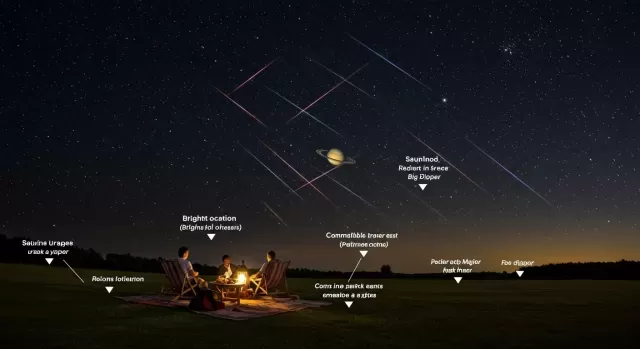
Directions to Look: While the radiant is in Perseus (north-eastern sky), don't stare directly at it. You are more likely to see meteors with your peripheral vision when looking slightly away from the radiant. Try looking towards the east-south-east, around Saturn, or north towards Ursa Major (the Big Dipper).
Time of Night: The best time is generally after midnight, when the Earth is turning into the meteor stream.
Essential Gear (or Lack Thereof)
The beauty of meteor shower viewing is its simplicity.
- No telescope needed: Your eyes are the best tool.
- Comfortable seating: A blanket or deckchair to lie back and relax is highly recommended.
- Patience: It takes time for your eyes to adjust, and meteors can appear sporadically. Allow at least 30 minutes for your eyes to fully adapt to the darkness.
- Warm clothes: Even in August, temperatures can drop at night.
The Moon's Influence: A Word of Caution
Unfortunately, there's a challenge this year. The proximity of the peak to the full moon means the bright moonlight may wash out fainter meteors. This doesn't mean the show is canceled, but expect to see fewer meteors than in years with a darker sky. Don't get discouraged, the brightest meteors will still cut through the moonlight.
| Factor | Description | Impact on Viewing |
|---|---|---|
| Light Pollution | Presence of artificial light | Reduces visibility of faint meteors |
| Moon Phase | Brightness of the moon | Can wash out fainter meteors, especially near a full moon |
| Weather Conditions | Cloud cover, humidity | Obstructs viewing entirely |
| Location | Proximity to city lights, horizon obstructions | Affects number of visible meteors |
Tips for Maximizing Your Viewing Chances
- Dark Adaptation: Avoid looking at your phone or other bright lights to preserve your night vision.
- Peripheral Vision: Look slightly away from the radiant (Perseus constellation) to catch more meteors in your peripheral vision.
- Bring Friends (and Snacks): Makes for a fun night.
- Be Patient: Meteor showers involve a lot of waiting. Be patient and enjoy the experience.
- Check the Weather Forecast: Make sure skies are clear before heading out.
The Science Behind the Show
Comet 109P/Swift-Tuttle: This is the parent comet responsible for the Perseid meteor shower. It is a large comet with a nucleus about 26 kilometers in diameter.
Orbital Mechanics: As the comet orbits the sun, it leaves behind a trail of dust and debris. When the Earth intersects this trail, the debris enters our atmosphere.
Speed and Heat: These particles enter the atmosphere at incredible speeds (around 59 kilometers per second). The friction with the air heats them up, causing them to burn up and create the bright streaks we see.
A Reminder of Our Place in the Cosmos
The Perseid meteor shower is not only a beautiful sight but also a reminder of our place in the vast universe. The comet that creates this spectacle is older than our own planet and a testament to the enduring nature of celestial objects.
FAQs about the Perseid Meteor Shower
Q1: What is the best time to watch the Perseid meteor shower?
A: The best time to watch is usually after midnight, peaking in the early morning hours (2 AM to dawn) on August 13th. Allow your eyes at least 30 minutes to adjust to the darkness.
Q2: Do I need any special equipment to view the Perseids?
A: No special equipment is needed. Your eyes are the best tool. Find a dark spot, lie back, and enjoy the show. Binoculars or a telescope will not enhance the view of meteors; they are better for viewing planets or deep-sky objects.
Q3: How many meteors can I expect to see during the peak?
A: Under ideal conditions (dark sky, no moon), you might see up to 50-100 meteors per hour. However, with the full moon this year, expect to see fewer, but the brightest meteors will still be visible.
Q4: What if it's cloudy on the peak night?
A: The Perseids are active for several days before and after the peak. Check the weather forecast and try viewing on a different night with clear skies.